Baby-Led Weaning: Our Family's Story
Welcome to a collection of honest, first-hand posts about introducing solids through baby-led weaning, navigating a premature arrival, and uncovering a little one's food allergies. These stories are shared in the hope that another new parent facing similar worries will feel a little less alone.
Our Allergy Journey
This post took a long time to write, because I worried about how it might reflect on me as a first-time mum. In the end I decided to share it, since even one parent helped by our experience makes it worthwhile.
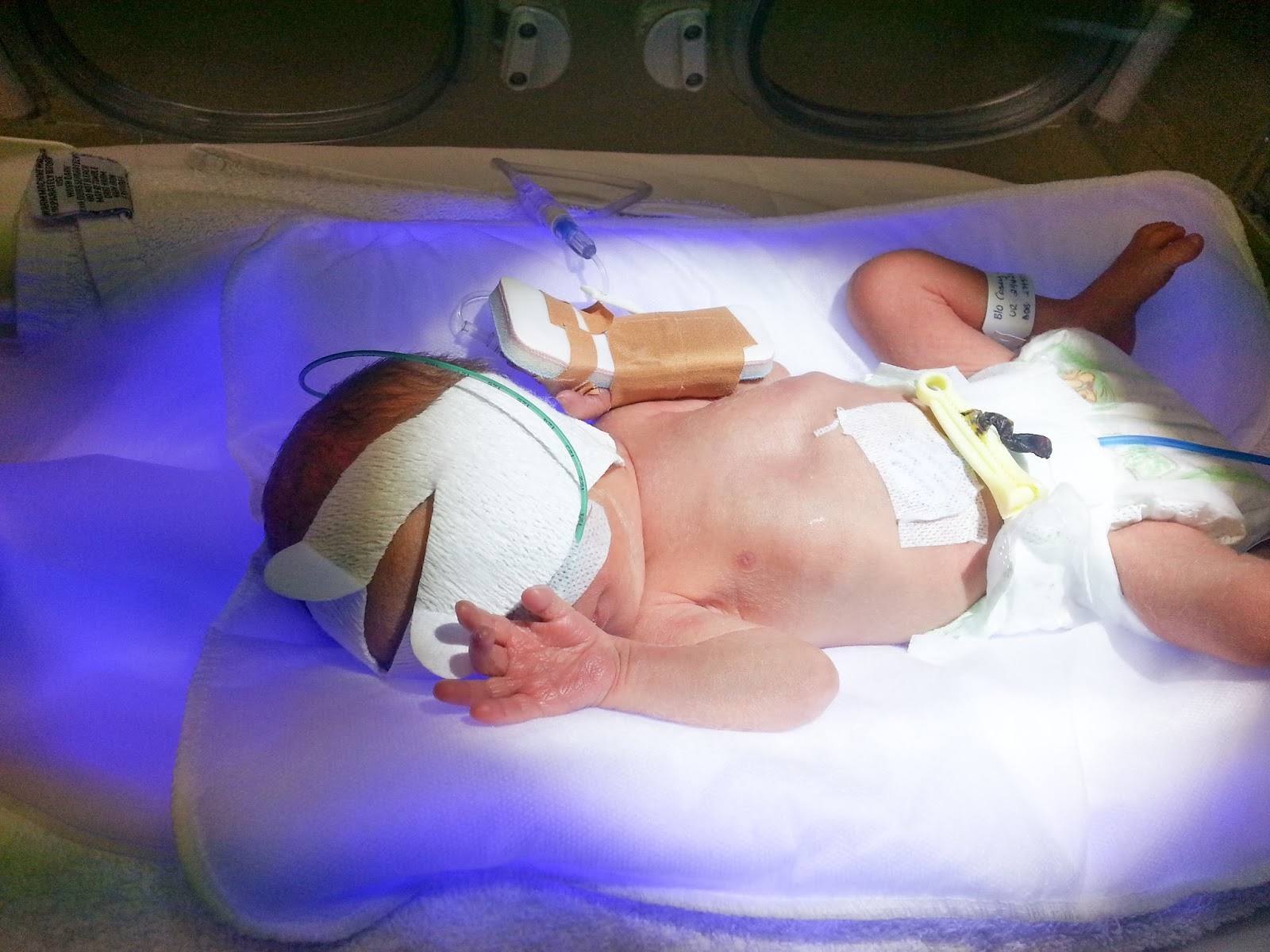
Lilly arrived six weeks early at 34 weeks because of severe pre-eclampsia. At just 1.59kg she was only 90 grams above the low birth weight threshold, which meant extra precautions and time in the NICU rather than Special Care, where she spent her first four and a half weeks.
We spent her whole first year balancing her real age against her corrected age. Nobody advised us whether to begin solids at six months real age or wait the extra six weeks for six months corrected. So I watched closely for readiness signs: no tongue-thrust reflex, showing interest in food and reaching for it while I ate, and sitting fairly well with limited support. Once most signs appeared, we began.
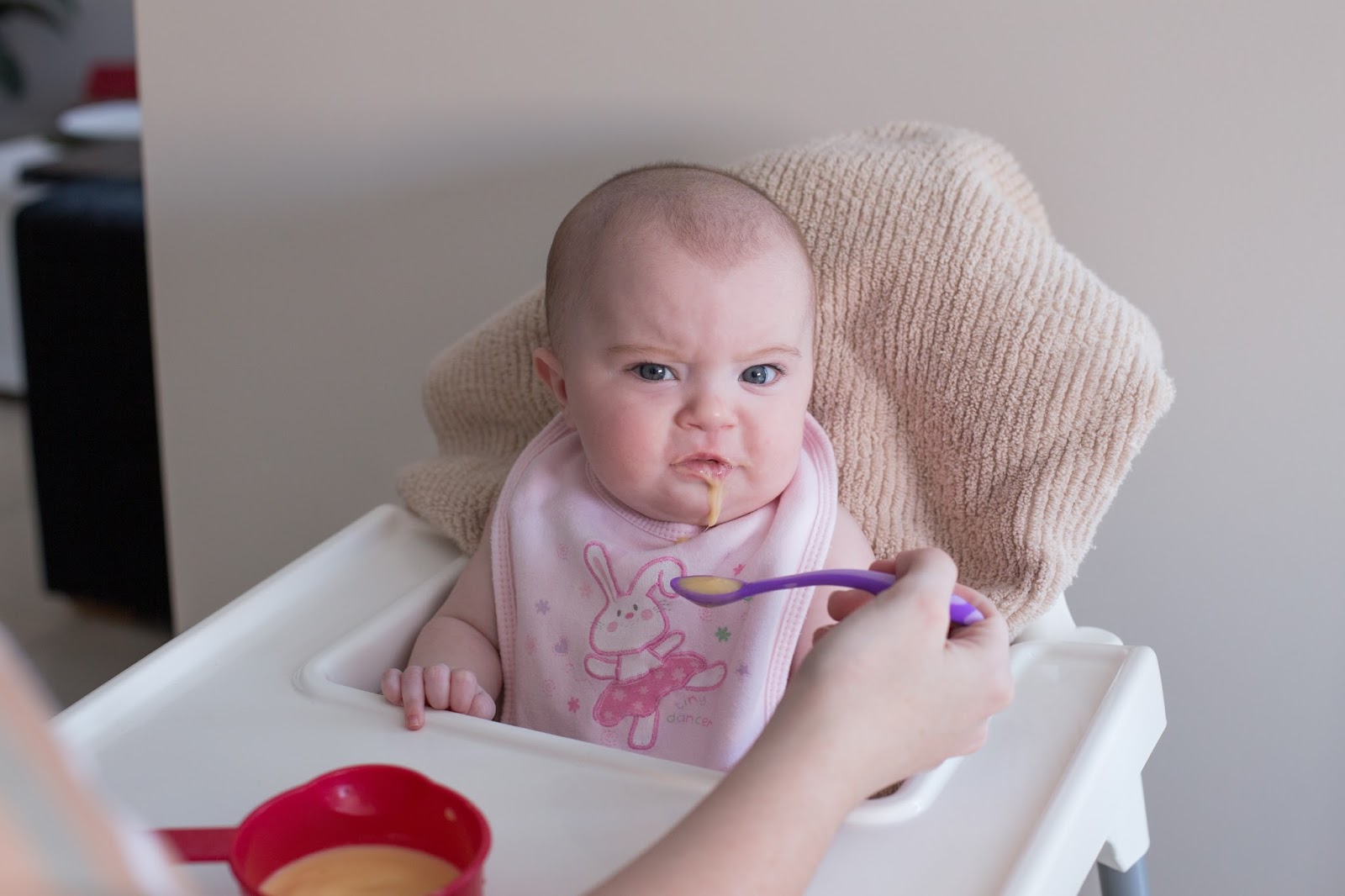
Her first food was a mango smoothie made with yoghurt and mango. There was no reaction, though she clearly wasn't impressed. A few days later I tried vegetables and toast, which she enjoyed, so we carried on with baby-led weaning.
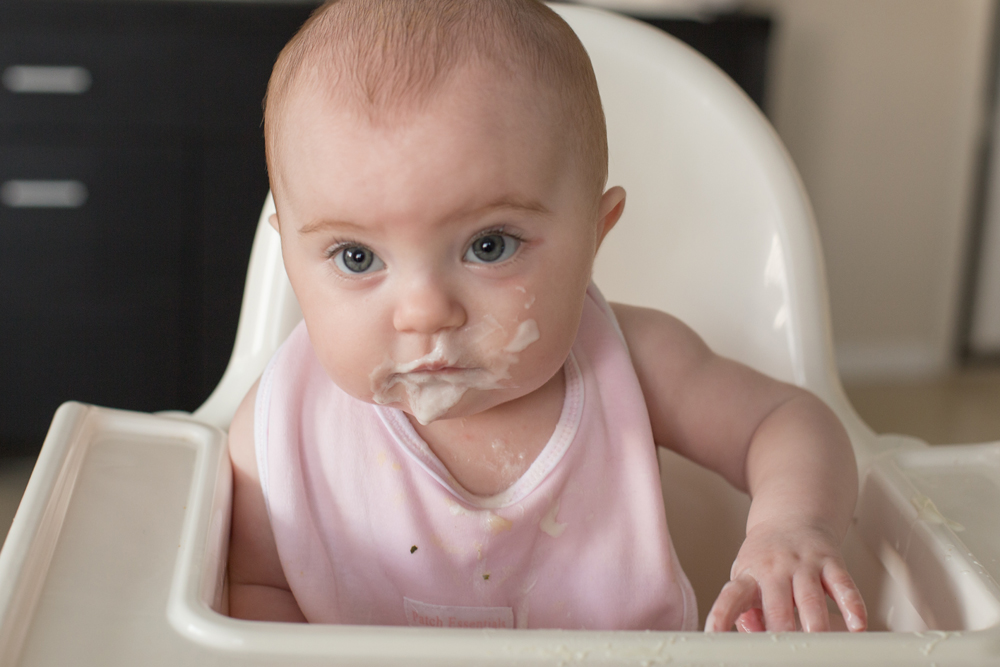
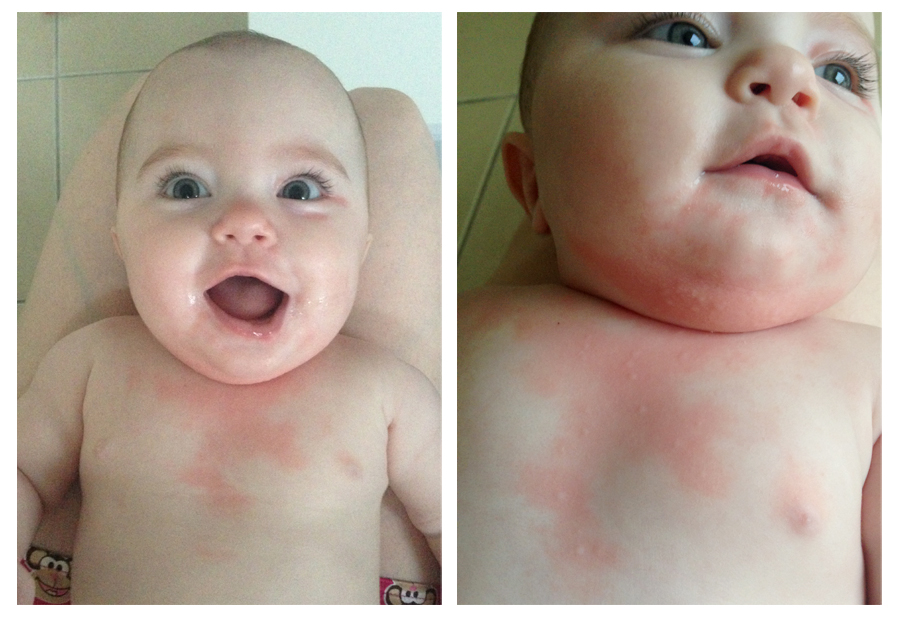
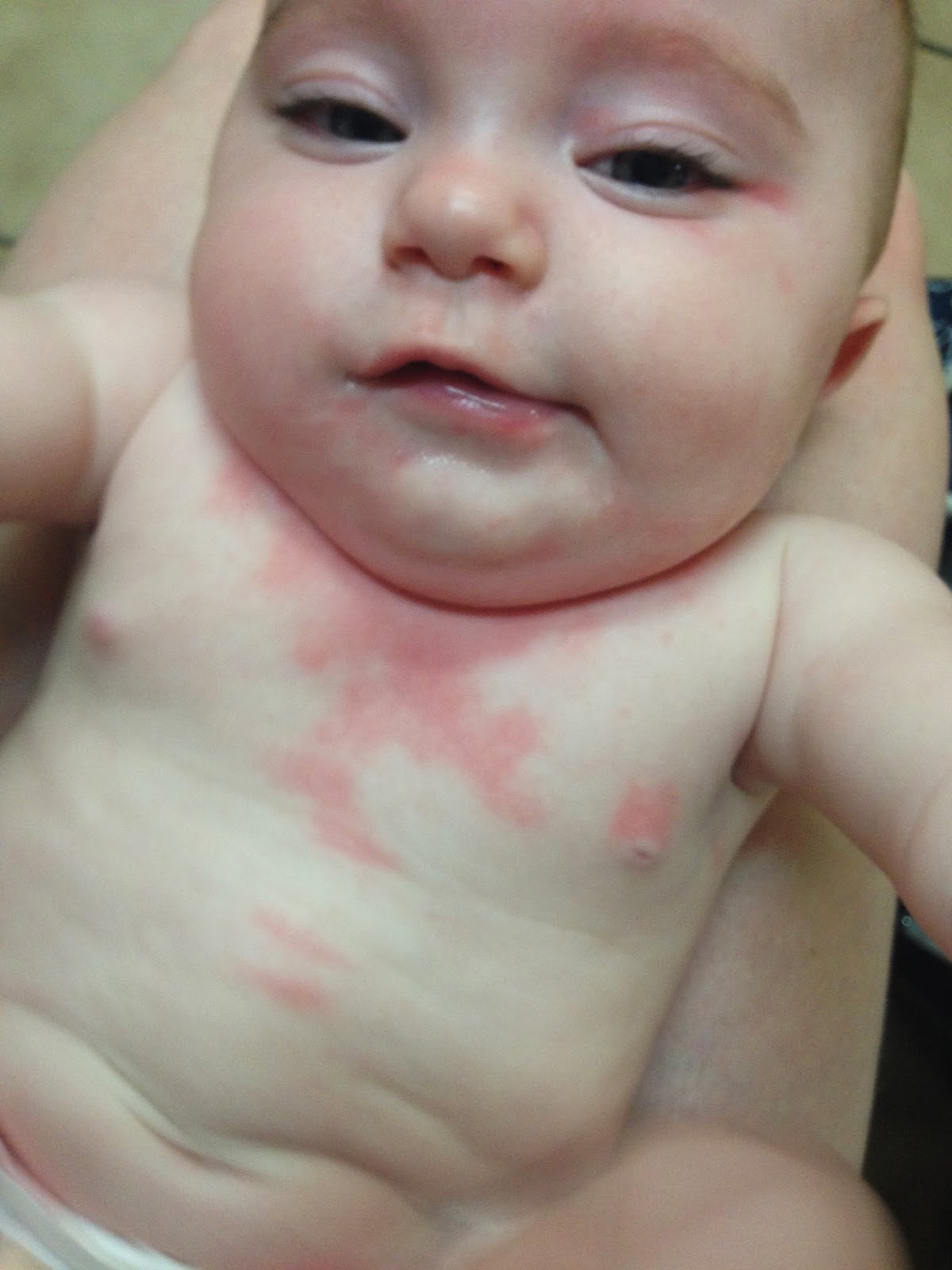
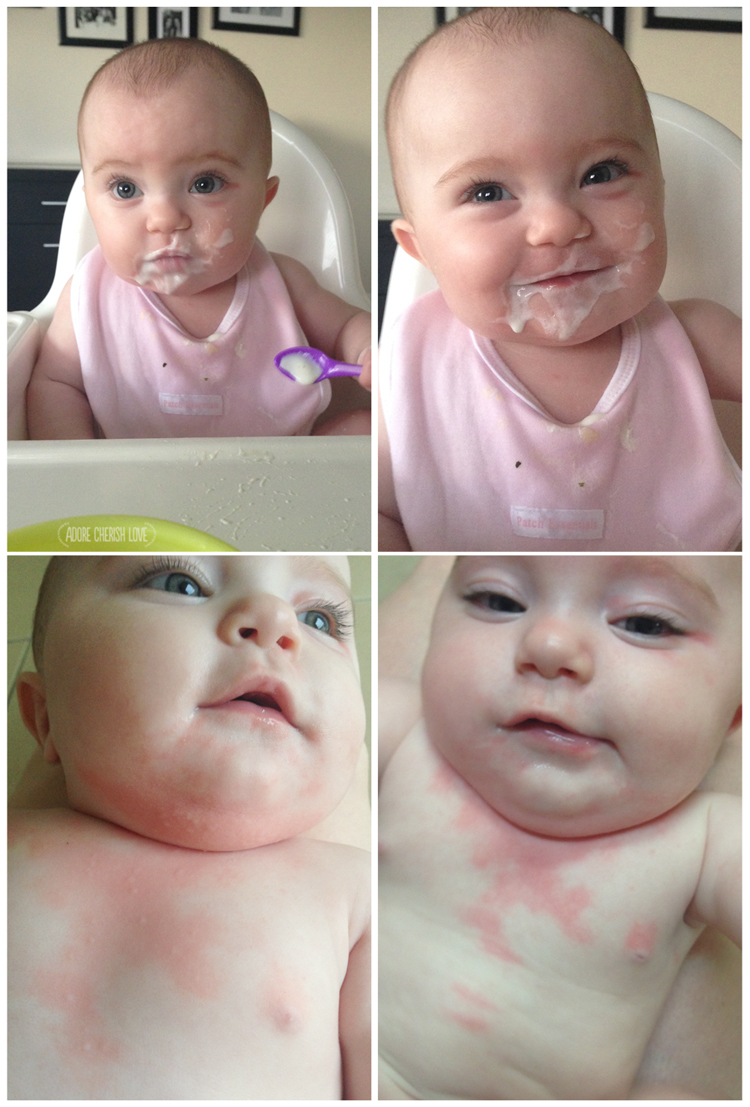
Once she tasted milk froth and a small red dot appeared on her lip. Unsure what to make of it, we simply watched her closely after her next taste of dairy. Not long after, I gave her yoghurt to play with. She loved it and was covered head to toe, but within minutes a nasty rash appeared and grew darker, with welts forming around her neck wherever the yoghurt had touched her skin.
I sat by the front door and called my husband in a panic, and luckily he was only a minute or two away. Those two minutes felt endless. When he arrived he confirmed my fears and we rushed to the doctor just down the road, without even dressing her. They squeezed us in to see my GP straight away. The photo above was taken in the waiting room, where the redness followed every spot the yoghurt had touched, even near her eye. I was terrified, even though she was quite content.
The GP concluded it was just a skin reaction and told us to keep offering as much milk as we liked. Unhappy with that, we booked another GP, the one my husband usually sees. After hearing Lilly's history, he agreed it sounded like a milk protein allergy and sent us for allergy testing.
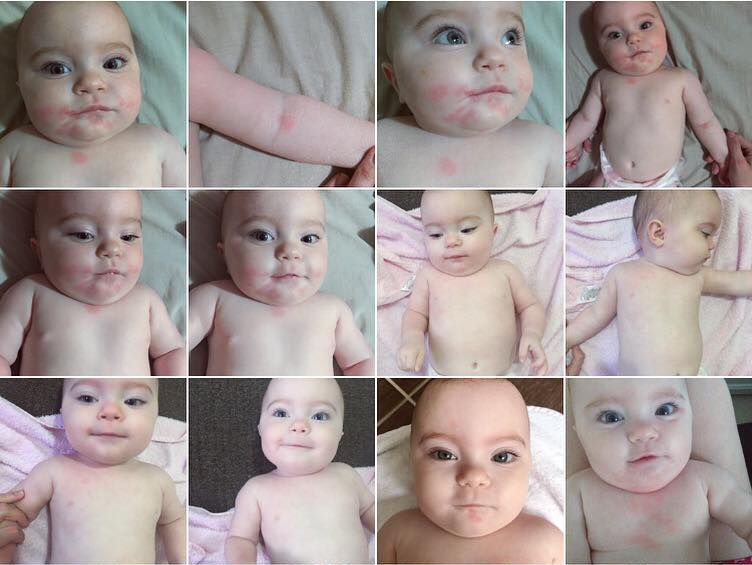
We kept avoiding dairy, with a few accidental slip-ups, the worst being mashed potato at a restaurant. A few spoons of it produced the reaction shown in the earlier photos. Later, egg and toast soldiers caused a very light rash that was still visible. We assumed I had used too much margarine, since she had eaten egg and margarine on toast many times before.
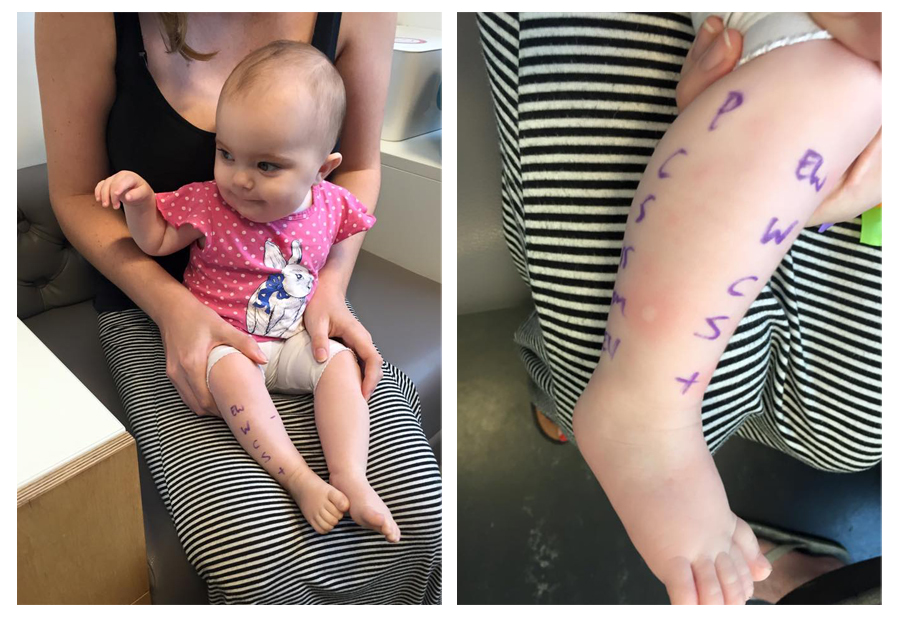
About two weeks ago Lilly finally had her allergy testing. She was very brave while the top allergens were tested: milk, egg yolk, egg white, white fish, shellfish, peanuts and sesame seeds. To our surprise, both egg white and milk came up positive. After meeting the specialist, we concluded that Lilly reacts to the uncooked protein in milk and eggs. She can tolerate them when very well cooked, at 180 degrees for 20 minutes, but anything less triggers hives. She is still too small for an epi-pen, so we are extremely careful. She still enjoys the occasional quiche for dinner, and we avoid anything where the proteins may not be fully cooked. We have been rash free since the appointment.
It has been a stressful and frightening few months working out what was happening. I often wonder whether starting solids early contributed to her allergies. It seems strange, since she tolerated milk-based formula for about a month as a newborn.
Explore more by topic:
Read the full allergy postOur Experiences With Baby-Led Weaning
My views on parenting have changed a lot since Lilly arrived. Before her, I thought mothers who baby-wore, co-slept and breastfed beyond a year were eccentric hippies. Now I find myself embracing natural and gentle parenting, and that includes baby-led weaning.
I had read a little about it before she was born and planned to combine it with some purees. My online mothers' group was wonderfully supportive as we all learned together, and a baby-led weaning Facebook group taught me a great deal.
What Is Baby-Led Weaning?
In short, it means letting your baby feed themselves finger foods without purees. The emphasis is on the baby deciding how much to eat, and how much to squish. There are plenty of benefits: it builds fine motor skills and coordination, introduces many textures early, which may help prevent a fussy toddler later, and the chewing motions are thought to support speech development. Best of all, it is great fun.
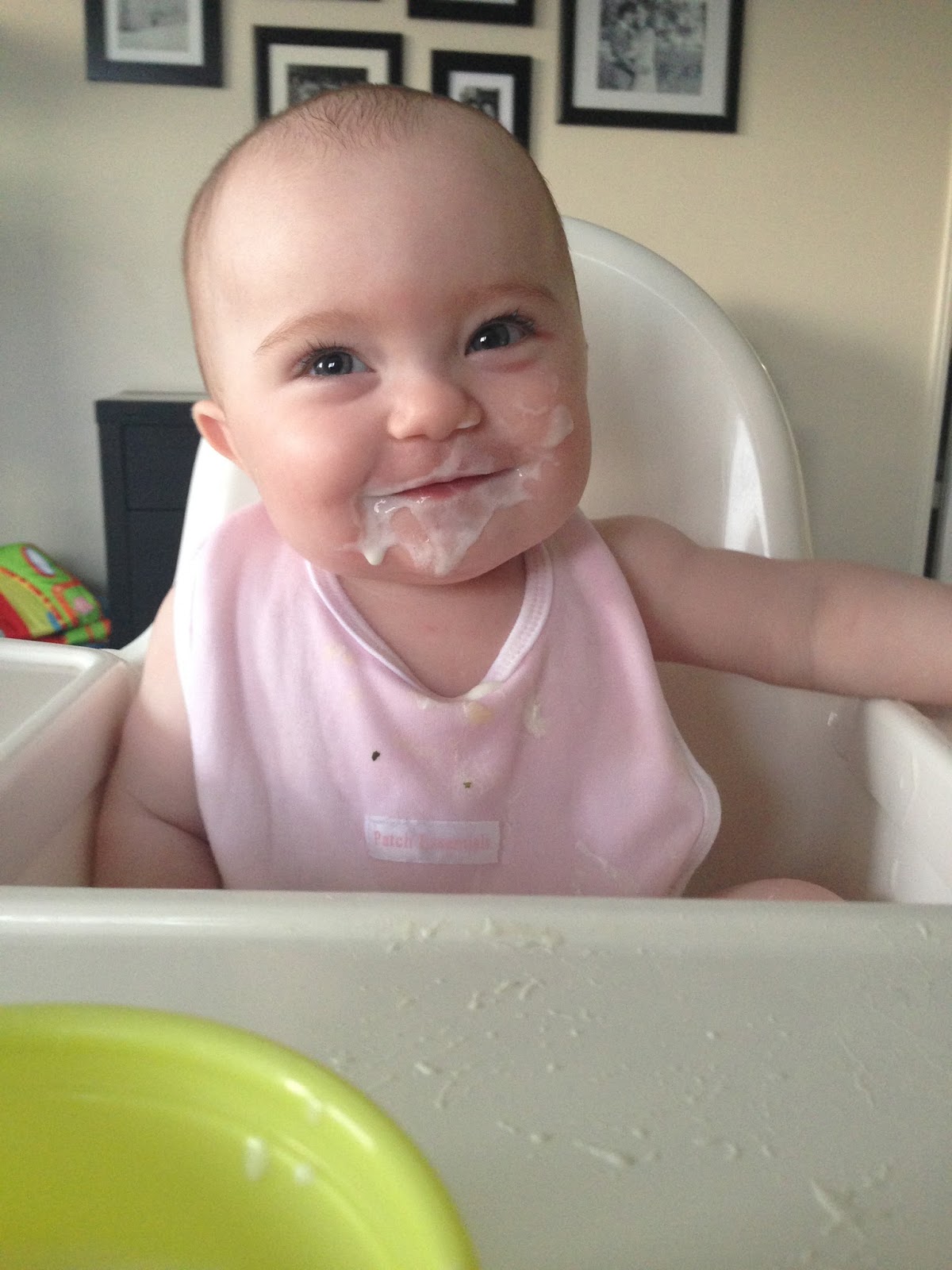
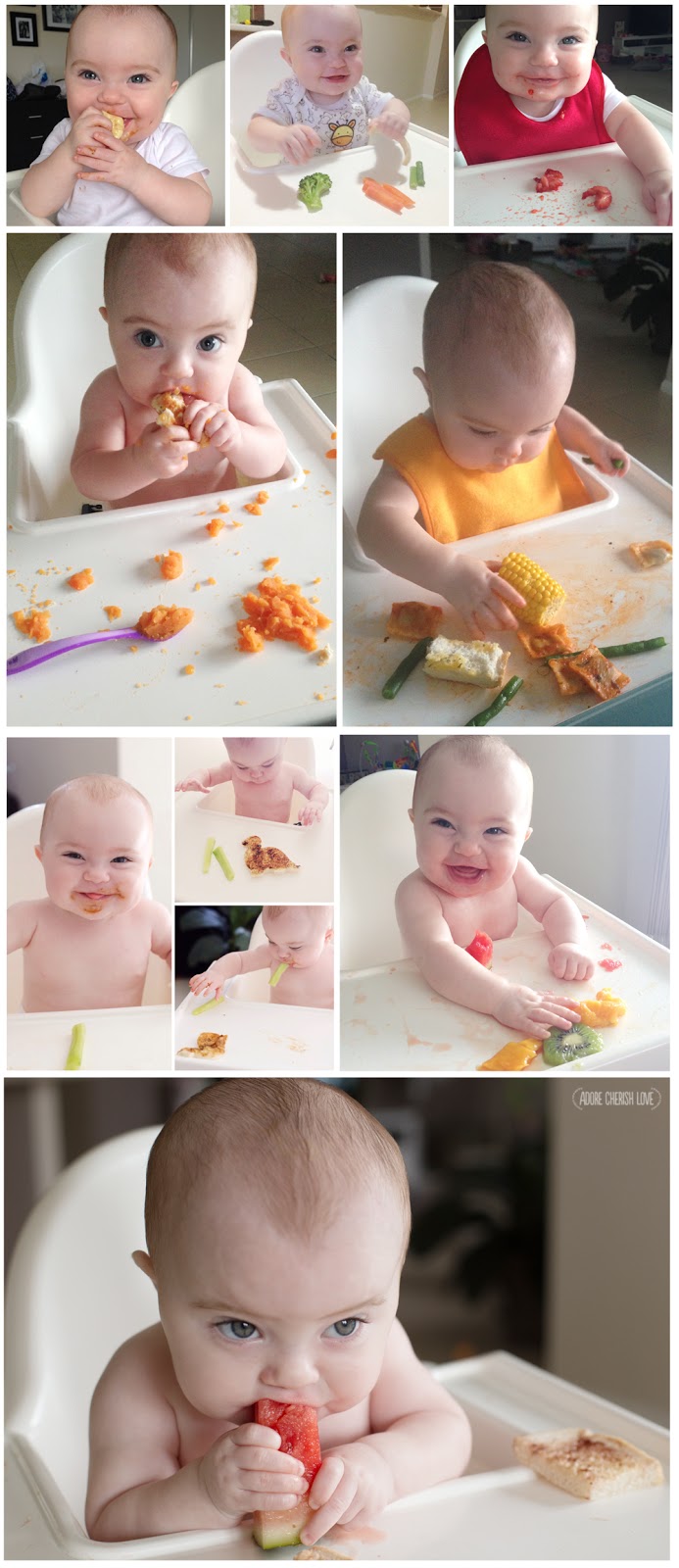
Lilly is always delighted at mealtime, and we know she is finished when the squishing, throwing and smacking begins. She is learning how much food she can handle and when to stop.
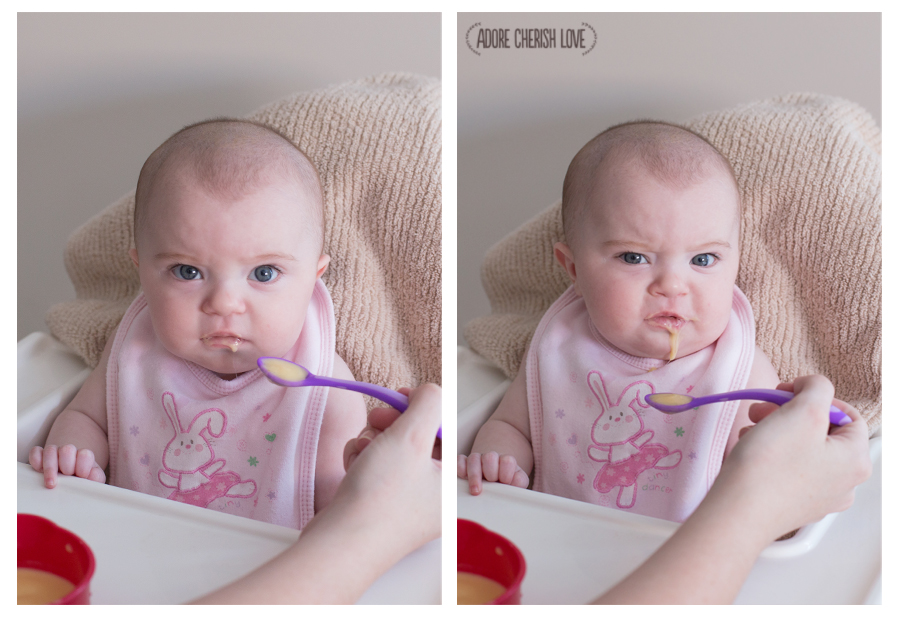
Because she was premature, we weren't sure when to start. At six months real age we sat her in the high chair and gave her a taste of my mango smoothie. She was thoroughly unimpressed with being spoon-fed, and her expression said it all. I thought perhaps she wasn't ready, so I researched further and learned that true baby-led weaning involves no purees. Babies are ready when they can easily bring toys to their mouths, sit unsupported or with little help, and make plenty of chewing motions while playing.
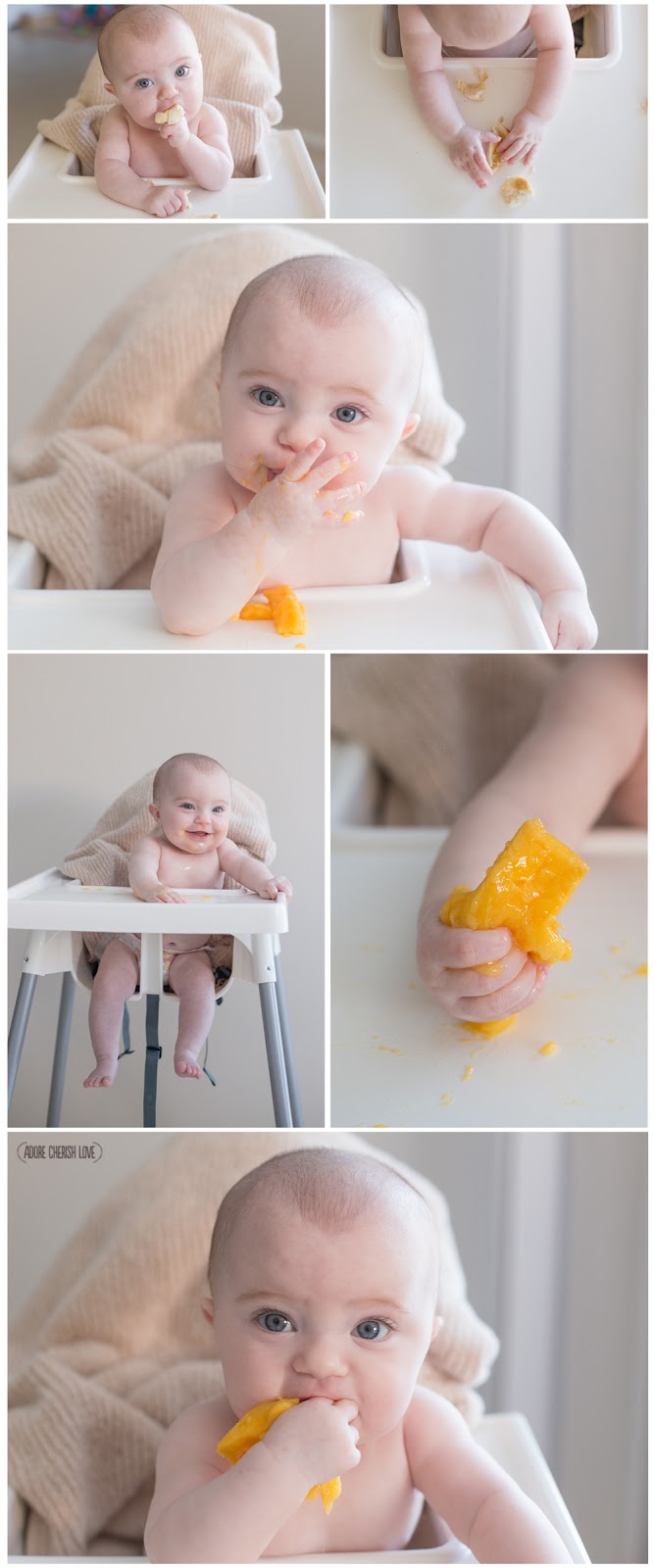
With that, I convinced my husband we wouldn't know until we tried. One morning we gave her a small piece of toast, which she chewed and sucked happily. Success! Later that day she loved some mango, and our baby-led weaning journey began.
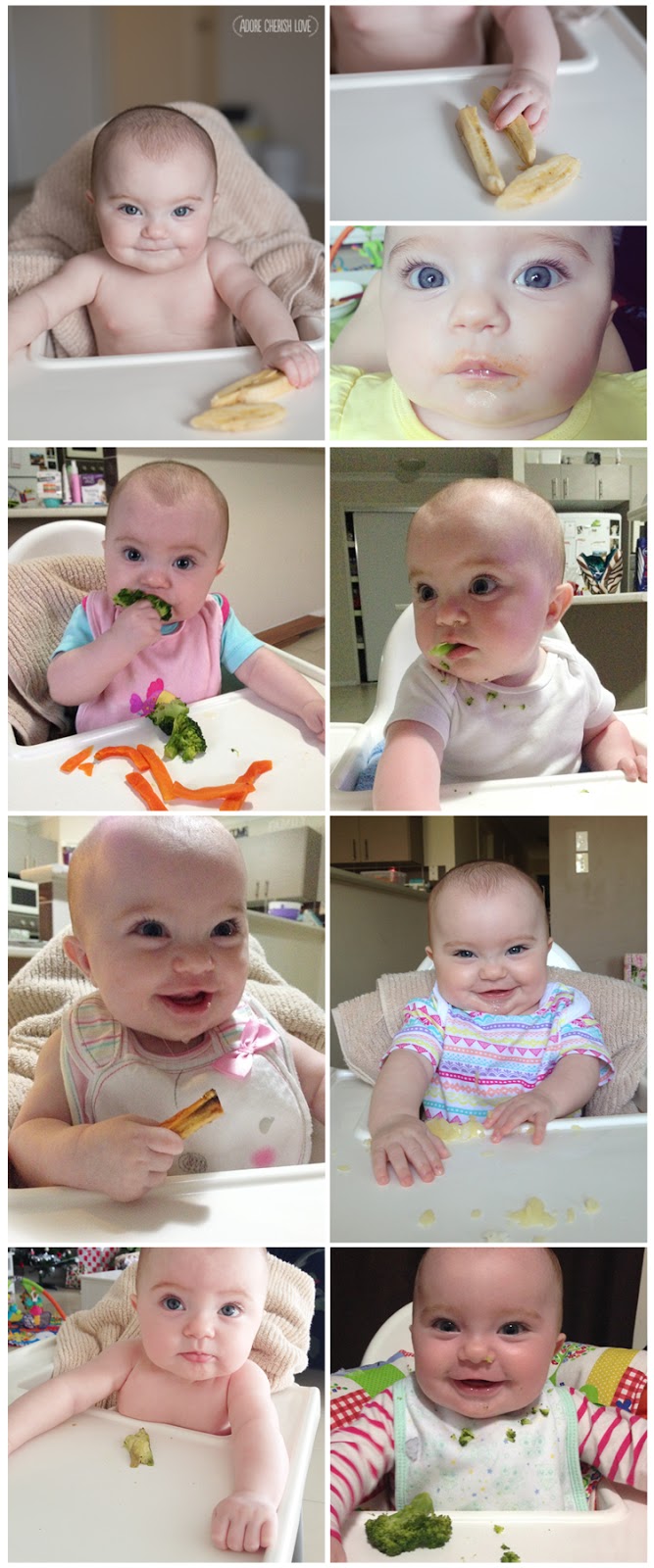
Over the following weeks Lilly tried many new foods: sweet potato, potato, pumpkin, banana, avocado, pear, carrot, spaghetti pasta and broccoli, her very favourite. I was anxious watching her eat and would scoop out any chunks she gnawed off. I knew it was the wrong thing to do, but I was scared, especially when she gagged. I stuck to fairly soft foods until we both grew more confident. As the photos show, she was always very happy as she ate. We had one minor setback when I introduced yoghurt.
Browse related topics:
Read the full baby-led weaning post Leave a commentMore From the Blog
- Lilly's first painting experience
- What's in my nappy bag
- Hospital bag 101: what worked and what didn't
- Welcome Lilly Anne
- Swimming nappies
Connect with us:









Share this post:
Email Blog Twitter Facebook Pinterest